Over 50 Years of Experience | We can lift it & shift it!

Lifting an Old Tank Takes More Than Knowing Its Empty Weight
October 29, 2026
An old above-ground tank can look ready for removal long before it is ready to lift. Original specifications, an approximate installation date and a replacement tank waiting on site do not confirm how much the existing tank weighs or whether its structure can withstand being lifted.
For agricultural and industrial tank replacements in NSW, these uncertainties can affect the removal method, project schedule and overall cost. GBP Cranes & Heavy Haulage can be contacted to discuss crane hire requirements and the information needed to assess a proposed lift. Establishing the tank's weight, structural condition and contents status early helps clarify which work must happen before crane attendance and allows suppliers to prepare quotations.
The relevant figure is the tank's weight in the condition it will be lifted, not simply the empty weight recorded when it was manufactured. The assessment must account for the original structure, later modifications, attached equipment and any material remaining inside.
An unreliable weight estimate can affect crane selection and lifting arrangements. Rather than assuming additional crane capacity will cover the uncertainty, the weight and its limitations should be established before the removal method is confirmed.
Original drawings, a manufacturer's data plate and purchase records can provide useful information about a tank's construction and original weight. However, these records need to match the tank being removed and clarify what the stated weight includes. A specification may cover the shell alone, excluding supports, internal equipment or fittings added after installation.
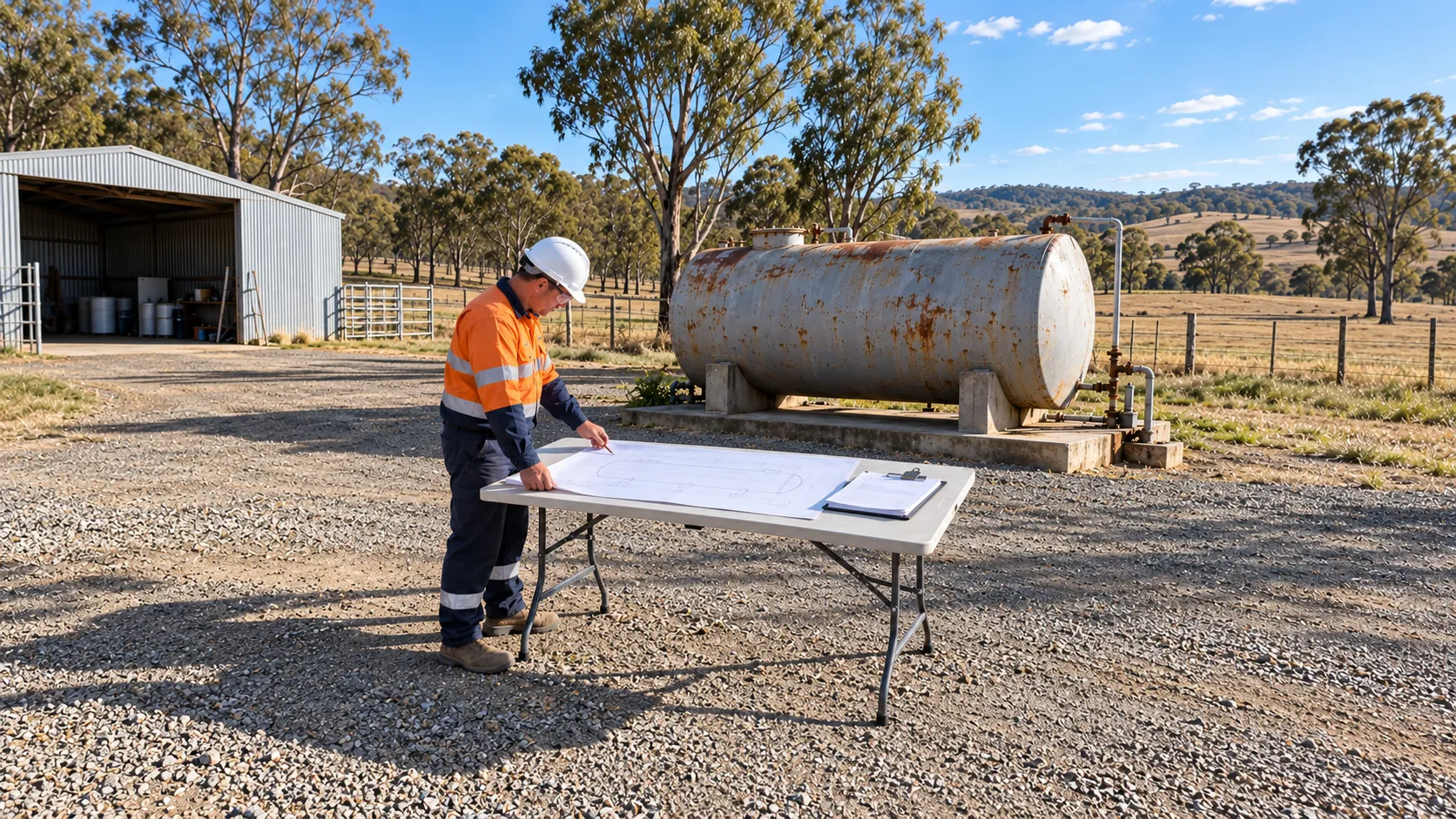
Maintenance records help identify repairs, replacement components and structural alterations that have changed the original assembly. If documentation is incomplete, an inspection may help establish what is present and identify where further technical or engineering assessment is needed.
Before requesting a quotation, gather the available information, including:
If information is missing, identify it as unknown rather than estimating without evidence. This gives the assessment team a clearer starting point and helps establish what further investigation may be necessary.
A tank described as empty may still contain liquid below an outlet, settled sediment or material adhering to internal surfaces. These residues can add weight, while material that shifts during lifting may affect the load's balance and stability.
External platforms, ladders, pipework and mounting brackets can also add weight beyond the original specification. Internal components may be less obvious, particularly when records are incomplete. The assessment needs to establish which items will remain attached during the lift and which specialists will remove beforehand.
Unknown contents require assessment by specialists. The tank should not be opened, drained or tested by an unqualified person to determine what remains inside. Its previous use may help specialists plan their investigation, but it does not establish its current contents or condition.
When comparing quotations, ask suppliers what information they require, which assumptions they are making and how unresolved weight uncertainties will affect the proposed work. The information on what to know before hiring a crane provides broader booking context, while an ageing tank may require additional assessment before a lifting plan can be confirmed.
Establishing the tank's weight does not confirm that it can withstand the forces involved in lifting. The lifting points, surrounding shell and supporting structure must all be suitable for the proposed operation in their current condition.
Age, corrosion, previous handling and repairs can affect these components. A lifting point that worked during installation may no longer be suitable for removing the tank years later.
Corrosion can weaken a lifting lug, its welds and the tank material around it. Previous handling or service conditions may also have caused damage that is not immediately obvious. An attachment that looks intact does not necessarily have sufficient strength for the proposed lift.
The original design also matters. A fitting that resembles a lifting point may not have been designed to support the entire tank. Even a documented lifting lug may have been intended for a specific installation arrangement rather than the tank's present condition.
A lifting team should determine what evidence is needed to establish suitability. Depending on the tank, this may involve reviewing design documentation, examining relevant components or obtaining engineering input. If records are unavailable, an assessment pathway should be established rather than assuming the original lifting points remain adequate.
Lifting forces pass from the attachment points into the surrounding shell and other structural components. A strong lug attached to weakened material can still leave the arrangement unsuitable.
A tank may remain stable on its usual supports but respond differently when lifted. Its normal supports distribute loads in a particular way, whereas a lifting arrangement may introduce concentrated forces or change how the structure is supported. Corrosion, distortion and previous repairs can affect its ability to withstand those forces.
This is why the assessment must consider more than the tank's weight and the crane's capacity. The lifting team may need engineering input to determine whether the proposed attachments and support arrangement are appropriate. An alternative lifting method also requires assessment because changing the support arrangement does not automatically resolve structural weakness.
When comparing suppliers, ask who is responsible for assessing the tank's lifting points and structural suitability, whether engineering review may be required and what information must be available before the method is confirmed. The advice on common mistakes before hiring a crane offers useful background, but the tank's individual condition needs specific attention.
A whole-tank lift is one possible removal method, not an outcome that should be assumed in advance. The proper approach depends on the established lifting weight, structural condition, contents status and site constraints.
Requesting a larger crane will not resolve a weakened tank structure or establish whether unknown contents can be moved safely. The crane contractor and any other specialists need a clear understanding of the tank and the responsibilities assigned to each party before the removal method is finalised.
A whole-tank lift may be feasible when the lifting weight has been adequately established, the structure can withstand the proposed forces and the tank can remain stable throughout the planned movement.
Each condition needs to be considered separately. Reliable weight records do not resolve uncertainty about settled material inside the tank, while confirmation that the contents have been addressed does not establish the strength of deteriorated lifting points.
The quotation should identify the assumptions behind the proposed crane work and any findings that could change its scope. If the quote is prepared before the tank's contents or structural condition has been adequately assessed, additional work or a revised removal method may be necessary.
For the crane component, experts must be contacted to discuss crane hire in NSW and the information needed to assess the proposed lift. Explain whether the tank remains in service, which specifications and maintenance records are available, what is known about its contents and whether any specialist assessments have been completed.
Clarify the scope of the quotation before booking. Crane hire should not be assumed to include tank cleaning, decommissioning, dismantling or disposal unless these services have been specifically confirmed.
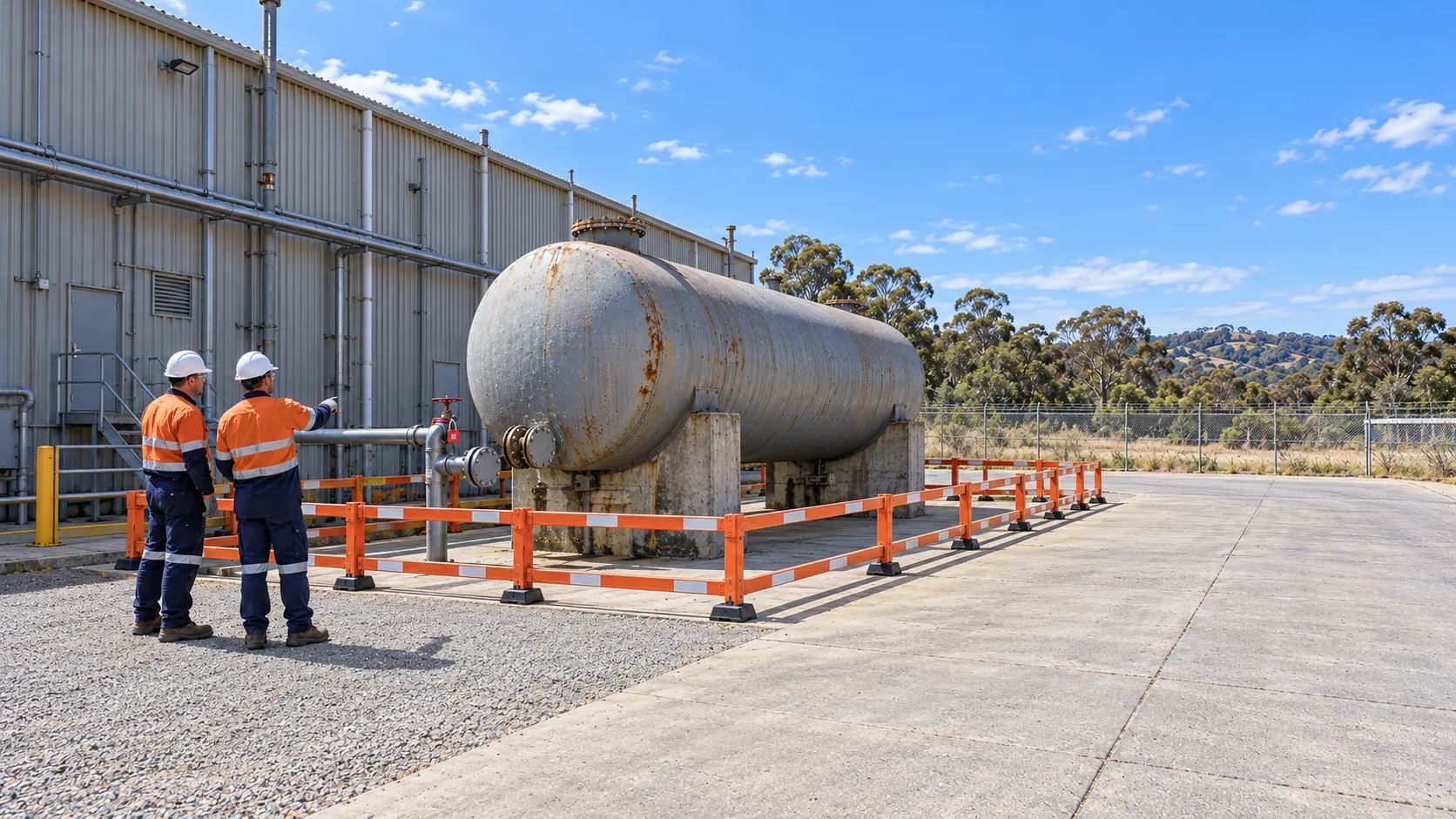
Some tanks require specialist work before their removal method can be established. Depending on their previous use and current condition, this may involve assessing unknown contents, cleaning the tank or completing other decommissioning tasks through qualified providers.
SafeWork NSW provides guidance on decommissioning chemical storage systems, including training requirements and addressing chemicals remaining in systems no longer in use.
If whole-tank removal is unsuitable, specialists may consider an alternative method, including sectional removal where appropriate. This can change the loads being handled, the structural assessment required, the equipment used and the coordination needed between contractors. The method should be selected only after the relevant risks and site constraints have been assessed.
Before work begins, confirm who is responsible for each stage, what must be completed before the crane arrives and who will communicate changes to the removal plan. Any change in the tank's condition, remaining contents or attached equipment should be passed on to the relevant team before the booking is finalised.
Early coordination helps reduce avoidable delays and clarifies what needs to happen before lifting can proceed. GBP Cranes & Heavy Haulage can discuss crane hire requirements and the information needed for the proposed operation. Having the available tank records, site details and assessment findings ready can help establish a clearer scope of work before the crane booking is confirmed.
