Over 50 Years of Experience | We can lift it & shift it!

What to Know Before Hiring a Crane for Large Construction Projects
March 18, 2026
Large construction projects rely on precise planning and having the right equipment available at the right time. One of the most important decisions is choosing and hiring the correct crane for the job. GBP Cranes & Heavy Haulage understands that the wrong choice can lead to costly delays, added safety risks and unnecessary budget pressure. The company also knows that many project managers, estimators and site supervisors are expected to make crane hire decisions while managing competing priorities and tight project schedules.
This article outlines the key considerations that should be resolved before a crane arrives on site. Readers will learn how to assess project scope and lifting requirements, how to match crane types to particular tasks and site conditions and how to account for access, ground bearing capacity and site logistics. It also looks at safety and compliance obligations, operator and lifting crew requirements, insurance and the real cost of crane hire in NSW, including support services and contingency planning. By understanding these factors early, construction professionals can make better-informed decisions, reduce project risk and improve the likelihood of keeping work on time and within budget.

Before comparing crane models or prices, it is essential to be clear about what needs to be lifted, how far it must be moved and the conditions on site. Good planning at this stage helps reduce last-minute changes, delays and unexpected costs once the crane arrives.
Defining lift requirements in detail before recommending a crane helps ensure the selected crane has the appropriate capacity, reach and configuration for the task and that any required permits, personnel and supporting equipment have been considered in advance.
The starting point is always the load itself. The crane supplier will need accurate information on:
The lift path also needs to be clearly defined. This includes how high the load must be lifted, how far it must be slewed or moved horizontally and whether there are obstacles such as buildings, scaffolds, power lines or trees. A clear understanding of the lift path helps determine the required radius and boom length, which directly affects crane size and configuration.
Even when the load and radius are known, the crane choice may be limited by site conditions. Before hiring a crane for a large project, it is important to understand:
For example, a heavier rough terrain crane may appear suitable from a capacity point of view, but it may not be practical if access roads are narrow or if the site does not have adequate hardstand for safe outrigger loads. In those situations, operators may advise on ground preparation, crane mats or alternative crane types such as a tower crane or a different mobile crane setup.
Not all lifts are the same. A straightforward pick-and-place operation has very different requirements from a complex lift near live services, over public areas or during a restricted shutdown window. Crane professionals will usually want to know whether:
For many large or complex projects, this information is used to prepare lift studies, crane charts and, where required, engineered lift plans. These documents show crane positions, radii, load paths and exclusion zones and are often required by principal contractors, engineers or site procedures.
Choosing the wrong crane can lead to delays, extra costs and avoidable safety risks. Before hiring, project managers need to match the crane type and capacity to the load, the site conditions and the construction programme rather than simply choosing what is available. Professionals help clients work through these details so the crane on site can perform the work safely and efficiently.
The key is to look beyond the headline lifting capacity. Radius, height, ground conditions, access, surrounding structures and how often the crane will need to move around the site all influence which crane will actually work in practice.
The starting point is always what needs to be lifted, how far and how high. This determines the likely crane size and configuration.
Operators will usually ask for the maximum load weight, including lifting gear, the maximum radius from the crane centre to the load centre and the required hook height. A crane rated at a certain capacity on paper may lift significantly less at a longer radius or with a higher boom angle, so accurate figures are essential.
For example, lifting heavy precast panels close to the crane may suit a smaller rough terrain or all-terrain crane. Lifting similar panels over an existing structure or services corridor at a longer radius may require a much larger crane or a different boom or jib configuration. Providing drawings, load schedules and lift studies helps confirm that the crane will have suitable capacity with a realistic safety margin.
Once the lifting requirements are clear, the site itself often becomes the deciding factor in crane selection. Access, ground bearing capacity and available setup space are all critical.
Rough terrain cranes can be well suited to tight, uneven or less-prepared ground where mobility within the project boundary is important. All-terrain cranes are often used on larger commercial or infrastructure sites where the crane may need to travel on public roads between lifts. Truck-mounted cranes can be a cost-effective option for lighter lifts where setup space is limited and frequent relocations are needed.
For restricted inner-city sites or projects involving high, repetitive lifting, a tower crane or self-erecting crane may be more efficient than a large mobile crane. In some cases, a single larger crane is more efficient than multiple smaller units once setup time, slew restrictions, site congestion and traffic management are taken into account.
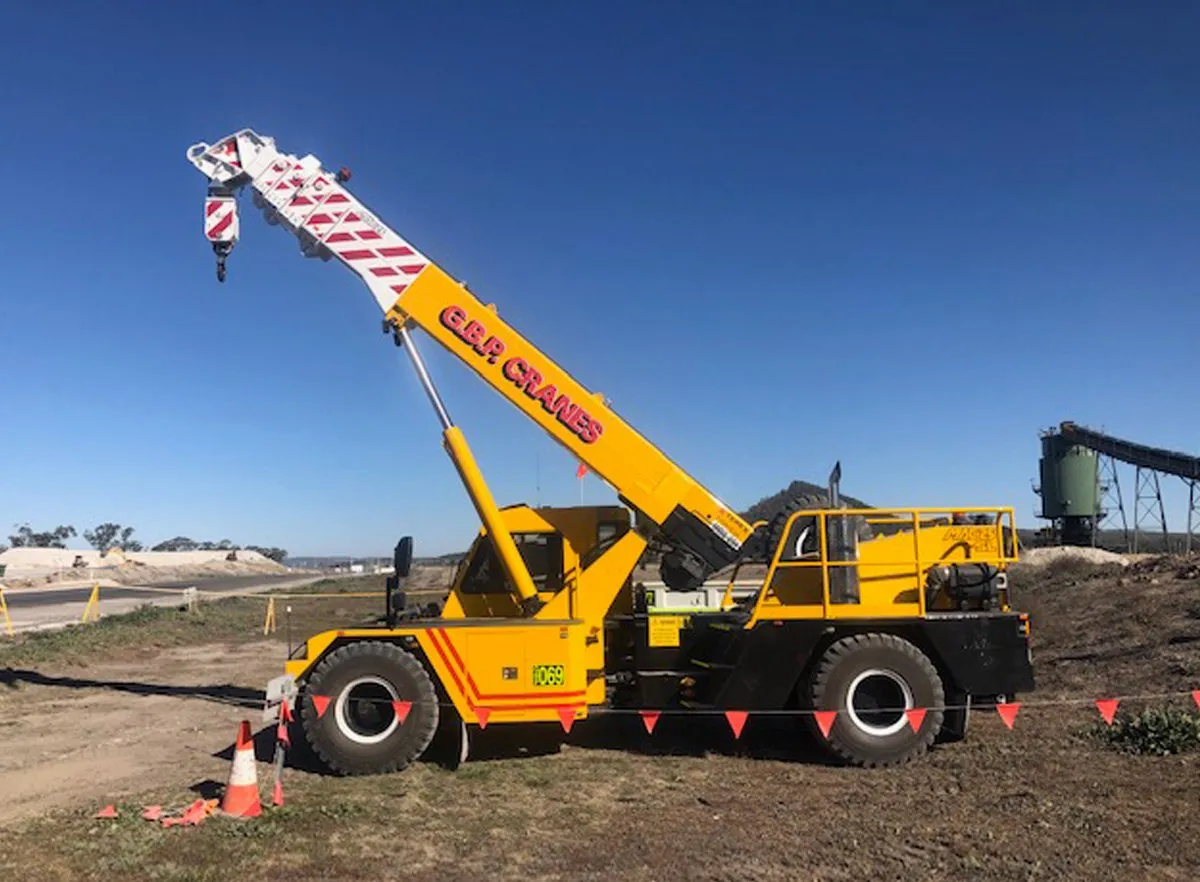
Even if a crane can perform the lift on paper, it must still be practical and safe to set it up on site. This is where early planning with the crane supplier becomes essential.
Crane pads must be capable of supporting the full outrigger load, which can be substantially higher than the lifted weight itself. Site conditions should be assessed so suitable mats, packing or temporary works can be used where needed. Access routes for the crane and any counterweights must also allow for turning circles, overhead obstructions and pavement or hardstand capacity.
Nearby powerlines, rail corridors, live traffic, existing structures and restricted airspace can all limit boom length, slewing range or crane position. In these situations, a crane with a smaller footprint or a different boom configuration may be required.
Before a crane arrives on site, proper preparation and safety planning play a major role in whether the lift runs smoothly or creates delays and added costs. Experienced operators work with clients to assess the site, identify risks and confirm that the ground, access routes and work areas are suitable for the selected crane.
Good planning also protects people, structures and services. A clear lifting plan, traffic management where needed, exclusion zones and communication procedures all help reduce the risk of incidents and support a more efficient lift.
The crane must stand on stable ground that can safely support its full working weight, including the load and any counterweights. Site preparation should begin with a careful review of:
The setup area should also be level within the crane manufacturer’s allowable limits. This may require minor earthworks or the construction of a compacted hardstand. Space is also needed for outriggers, counterweight installation and support vehicle movements. Obstructions such as spoil piles, rubbish and loose materials should be cleared before the crane arrives.
Safe access in and out of the site is essential for both cranes and support vehicles. The client should confirm:
If access is tight or work affects public roads, footpaths or traffic flow, traffic management plans, permits or temporary road closures may be required. Planning for these requirements early helps avoid delays and supports safer site access on the day of the lift.
Before the hire day, there should be a documented lift plan that addresses:
For larger or more complex lifts, an engineered lift study may also be required. Professionals can assist with lift planning so crane capacity charts, ground conditions and site constraints are properly aligned.
It is also important to confirm the personnel required for the work. Depending on the lift, this may include a licensed crane operator as well as qualified doggers, riggers, supervisors and spotters. Clear communication procedures and site supervision are essential throughout the lift.
Organising a crane for a large construction project involves more than selecting the right machine. Councils, road authorities, principal contractors and site conditions can all affect what can be lifted, where the crane can operate and when the work can take place. Getting permits, access arrangements and coordination right early helps reduce the chance of delays on the day of the lift.
Operators work with clients to plan this stage carefully so the crane arrives on time, with the necessary information available and the site ready for safe setup and operation.
Many larger lifts involve some form of permit or approval, particularly where public roads, footpaths, oversize transport or traffic impacts are involved. The exact requirements depend on the location, crane size, travel route and whether the work affects public infrastructure or surrounding properties. Typical approvals may include road occupancy permits, traffic management plans, oversize or overmass permits for crane delivery and permissions for lane or footpath closures.
Responsibility for permits and approvals should be confirmed early, as it may sit with the client, principal contractor, crane company or a combination of these parties depending on the site and the scope of work. Technical information such as crane dimensions, lift radius, outrigger loads and lift planning details may be needed to support permit applications. Where public road use or oversize travel is involved, approval and scheduling requirements should also be confirmed well in advance.
Successful crane setup depends on clear, safe access and adequate ground support. Before any lift, it is important to assess how the crane and support vehicles will reach the site, where they can turn and park and whether powerlines, awnings, trees or other overhead obstructions restrict movement.
Clients should confirm that access gates are wide and high enough, internal roads are free from parked vehicles and stored materials and underground services are known. Heavy cranes and outriggers can damage pits, basements or unprotected services if these issues are not identified in advance. For larger cranes or lifts over sensitive structures, engineering confirmation of ground bearing capacity may also be needed.
If site space is limited, staged deliveries or assist cranes may be needed where site conditions and permit requirements allow. Clear communication about site constraints helps avoid last-minute changes and supports more efficient crane selection and setup planning.
Crane time is most effective when it is integrated properly into the overall construction programme. Experts work with site managers to align crane arrival, rigging time and lifting windows with the availability of loads, riggers and other trades.
On the day of the lift, the exclusion zone around the crane should remain clear and any conflicting work, such as concrete pours or major deliveries, should be rescheduled where possible. Pre-start meetings can be used to confirm roles, review the lift plan and check that rigging gear, load details and weather conditions remain within acceptable limits. For multi-day or staged lifts, the company can also help sequence crane movements, counterweight changes and demobilisation so disruption to the wider project is kept to a minimum.
Securing the right crane for a large construction project is not simply a booking exercise. It is a process of managing risk, cost and productivity with care. From the outset, it is important to define the scope of work, understand site constraints and match them with a crane that has the appropriate type, capacity and reach for the task. Just as important is confirming that safety planning, compliance requirements, access, permits and engineering considerations have all been properly addressed.
By asking the right questions early, reviewing the necessary documentation and working through a clear lifting plan, project teams can reduce uncertainty and make crane hire decisions with greater confidence. That approach helps protect people, avoid preventable delays and improve the chances of delivering the project on time, on budget and to the required standard.
