Over 50 Years of Experience | We can lift it & shift it!

What Wind Speed Is Too High for Crane Operations?
August 25, 2026
Wind is one of the most significant weather factors affecting crane operations, particularly when lifting at height. Conditions may appear manageable at ground level while wind around the boom, jib and suspended load is considerably stronger or more turbulent. For projects requiring cranes in Tamworth, understanding how wind can affect load control, crane stability and overall site safety is an important part of planning a safe and efficient lift.
There is no single maximum wind speed that applies to every crane or lifting operation. Safe operating limits depend on factors such as the crane manufacturer’s specifications, equipment configuration, load size and shape, lift height, working radius and conditions at the site. GBP Cranes & Heavy Haulage takes these variables into account when planning lifting operations, ensuring work remains within applicable equipment limitations and site-specific safety requirements. Rather than relying on one general wind-speed figure, safe crane operation depends on assessing how the crane, load and surrounding environment interact and recognising when conditions make it necessary to postpone a lift.
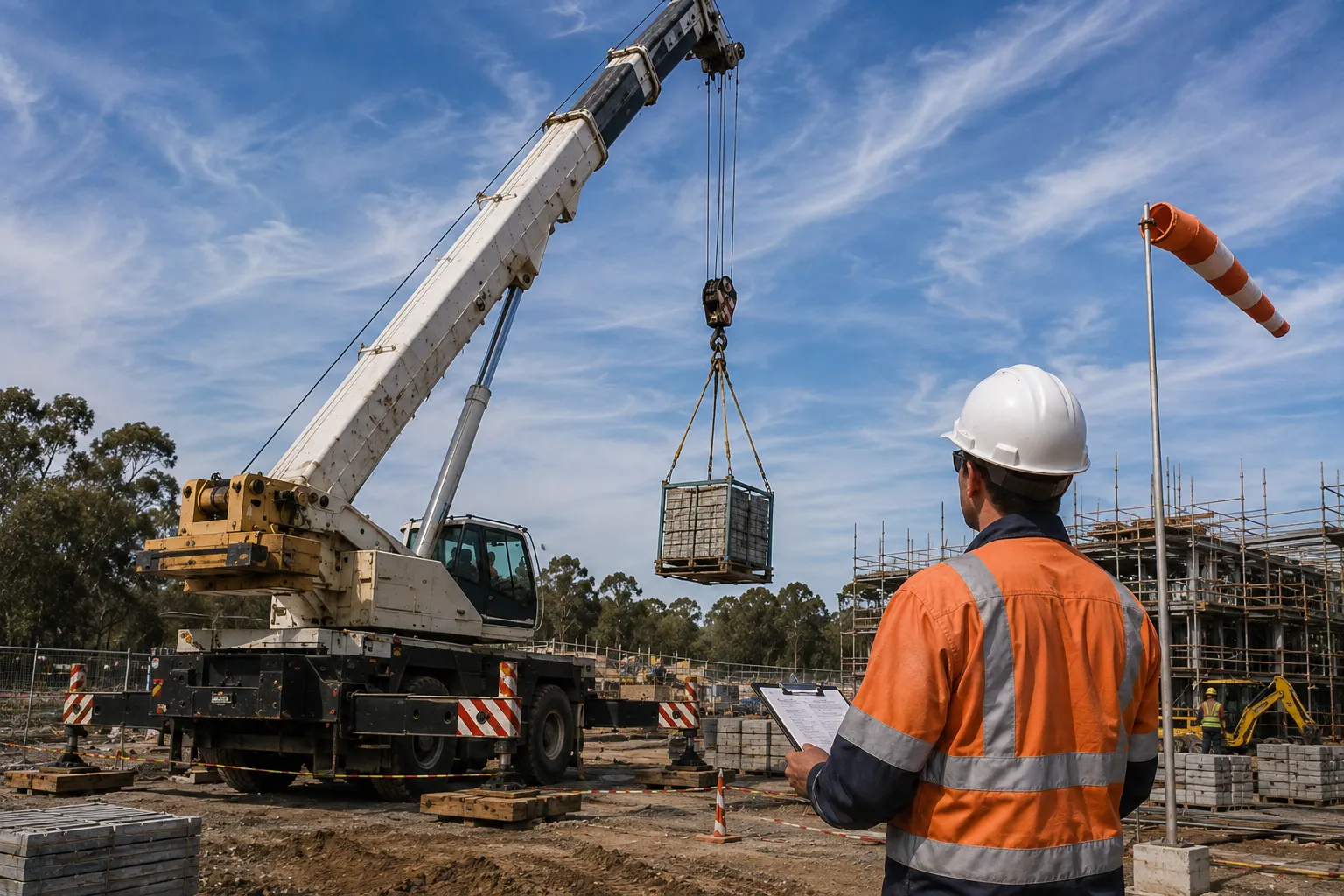
A crane's safe wind limit begins with the manufacturer's specifications, but the practical limit for an individual lift may be lower. The crane configuration, load characteristics, site exposure and real-time weather conditions all need to be considered before work proceeds.
Australian safety guidance reinforces this approach. SafeWork NSW advises that crane operations should cease when wind exceeds the manufacturer’s specified wind limit and notes that different limits may apply to different equipment and activities.
Crane manufacturers specify operating limitations for different crane configurations. These may take into account factors such as:
These limitations must be checked against the actual crane configuration being used for the lift.
Some crane guidance and manufacturer specifications refer to wind speeds around 10 m/s, or 36 km/h, for particular mobile crane operations. Queensland's Mobile Crane Code of Practice 2024, for example, notes that 10 m/s is specified by a number of crane manufacturers for some loads. Importantly, it also states that the allowable wind speed may need to be considerably lower depending on the suspended load and lift configuration.
Figures such as 10 m/s should therefore be treated as examples of limits that may apply to certain cranes and configurations, not as a universal safe operating speed. The manufacturer's crane manual, load chart and other applicable instructions remain the starting point for determining the limit for a particular lift.
The load can be just as important as the crane when determining whether conditions are suitable for lifting. Wind acts against the exposed surface of a load. This effective surface is often referred to as its sail area. Large, flat or lightweight loads can catch considerably more wind than compact loads of similar or even greater weight.
Examples of wind-sensitive loads include:
A compact piece of machinery may remain comparatively stable in conditions where a large wall panel becomes difficult to control.
Queensland's mobile crane guidance identifies load frontal area, boom extension, boom height and working radius as factors that can increase wind-related risk. It also notes that relatively light loads with a large surface area can be particularly affected. For that reason, the allowable wind speed for a particular lift may be substantially lower than the crane's maximum structural or operational wind limit.
Crane configuration also changes how wind affects the lift. Longer booms expose more crane structure to the wind. Increasing the crane lift radius generally reduces available lifting capacity and can make changes in load position more significant. Jibs, fly extensions and other attachments may introduce additional exposed surface area.
Factors requiring consideration include:
Lifts at long radius, high elevation or close to the crane's rated capacity require particularly careful consideration of weather conditions. The published crane limits should always be applied to the actual configuration being used rather than assuming that a figure for one setup applies to another.
Two identical cranes performing similar lifts can experience very different wind conditions depending on their surroundings.
Local conditions may be affected by:
Turbulence is particularly important because wind does not always act as a steady force. Sudden gusts and changes in direction can cause a suspended load to rotate, swing or move unexpectedly. The practical wind limit should therefore provide enough margin for the specific conditions at the site rather than relying solely on a theoretical maximum.
Weather forecasts are valuable during lift planning, but the conditions actually experienced at the crane determine whether lifting can safely proceed. Wind should be monitored before and during operations, particularly where the crane manual, lift plan or risk assessment requires ongoing measurements.
Many cranes use anemometers or other wind-monitoring equipment to provide the operator with information about conditions at height.
Depending on the crane and system, monitoring equipment may provide information such as:
Where monitoring equipment is fitted, it should be positioned, maintained and used in accordance with the manufacturer's instructions. This is particularly important because wind near the boom, jib or load may differ substantially from the conditions experienced by workers standing at ground level.
Portable wind meters may also be used by supervisors or lifting personnel to assess conditions at different areas of the site.
Measurements can be useful around:
Multiple readings can help identify localised wind behaviour that may not be obvious from a single measurement. The monitoring method should be appropriate for the crane, site and lifting operation and should form part of the overall lift planning process where wind is a significant risk.
Average wind speed does not tell the whole story. A site may experience moderate average conditions while still receiving much stronger short-duration gusts. These gusts can suddenly increase the lateral force on both the crane and suspended load.
Queensland's mobile crane code notes that manufacturer wind limits may be based on maximum wind gusts rather than average wind speed, making accurate monitoring of gust conditions particularly important. This is one reason lifting should not continue simply because the average reading remains below a particular figure.
If gusts cause the load to swing, rotate or become difficult to control, the conditions require reassessment even if a numerical limit has not yet been reached.
Crane operations should be stopped before conditions develop into a loss-of-control situation. The decision is based on manufacturer limitations, the lift plan, site procedures, load characteristics and real-time conditions.
Operations should be paused when:
Large surface-area loads may require lifting to stop considerably earlier than compact loads.
SafeWork NSW specifically advises construction sites to cease crane operations when wind exceeds the manufacturer's specified limit and to follow manufacturer guidance for hoisting equipment in high or gusty winds.
When lifting is suspended, any suspended load should be dealt with in accordance with the lift plan and safe operating procedures. The crane should then be placed in the appropriate condition specified by the manufacturer for the circumstances.
This is important because different crane types can require very different procedures. Tower cranes, for example, may need to be placed in an out-of-service configuration that allows them to weathervane, while mobile crane requirements depend on their design and configuration.
Generic instructions such as lowering, retracting or locking a boom should not be applied to every crane. The manufacturer's procedures and site-specific arrangements determine the correct response.
Lifting should only resume when conditions have been reassessed and the relevant personnel are satisfied that the operation can continue within the established limits.
This may include confirming that:
If the next load has a greater sail area or requires a more demanding crane configuration, its allowable wind threshold may be lower than that used for previous lifts.
Wind is not the only weather condition that can affect crane safety. Rain, thunderstorms and changing ground conditions can also require lifting operations to be reassessed or suspended.
These hazards should be considered alongside wind rather than treated separately.
Rain does not automatically prevent all crane work, but it can introduce additional hazards. Heavy rain can reduce the operator's or dogger's visibility of the load, landing area and surrounding workers. It can also affect access surfaces, increase slip hazards and interfere with clear communication.
Lifting should be reconsidered where rain prevents the crane operator or lifting team from maintaining the visibility and communication required for safe control of the load. Rain can also affect some loads themselves.
Materials or equipment that hold or absorb water may become heavier than expected. Where this could materially affect the planned load weight, the lifting team should reassess the load before proceeding.
Thunderstorms introduce hazards beyond wind, including lightning, heavy rainfall, rapidly changing wind direction and poor visibility.
Rather than applying one generic shutdown procedure to every crane, the site should have arrangements for responding to thunderstorms in accordance with the crane manufacturer's instructions, risk assessment and emergency procedures.
SafeWork NSW identifies high winds, poor visibility, lightning and thunderstorms as weather conditions that should be considered during crane operations. Its guidance also recognises the potential for crane work to expose workers to serious risks during electrical storms.
Where lightning presents an immediate or imminent risk, lifting should cease and the crane should be placed in the appropriate safe condition specified for that crane.
Workers should not improvise shutdown arrangements during a storm. Crane-specific procedures should be established before adverse weather arrives.
Weather can also affect the surface supporting the crane. Heavy rain and flooding can reduce the bearing capacity of soil, fill and other supporting surfaces. For mobile cranes, this can create a serious risk of outriggers or tracks settling unevenly.
Warning signs can include:
A recent Workplace Health and Safety Queensland safety alert highlighted the risk of mobile plant overturning when outrigger feet sink into unsuitable supporting ground.
Ground-bearing capacity and outrigger loads should therefore be considered during crane setup and reviewed if weather changes site conditions. Understanding how ground conditions affect crane lifts is particularly important after heavy rainfall, as moisture can reduce bearing capacity and cause settlement beneath outriggers or tracks.
Suitable mats, plates or engineered support arrangements may be required, but their selection should be based on the expected loads and actual ground conditions rather than used as a substitute for confirming that the supporting surface is suitable.
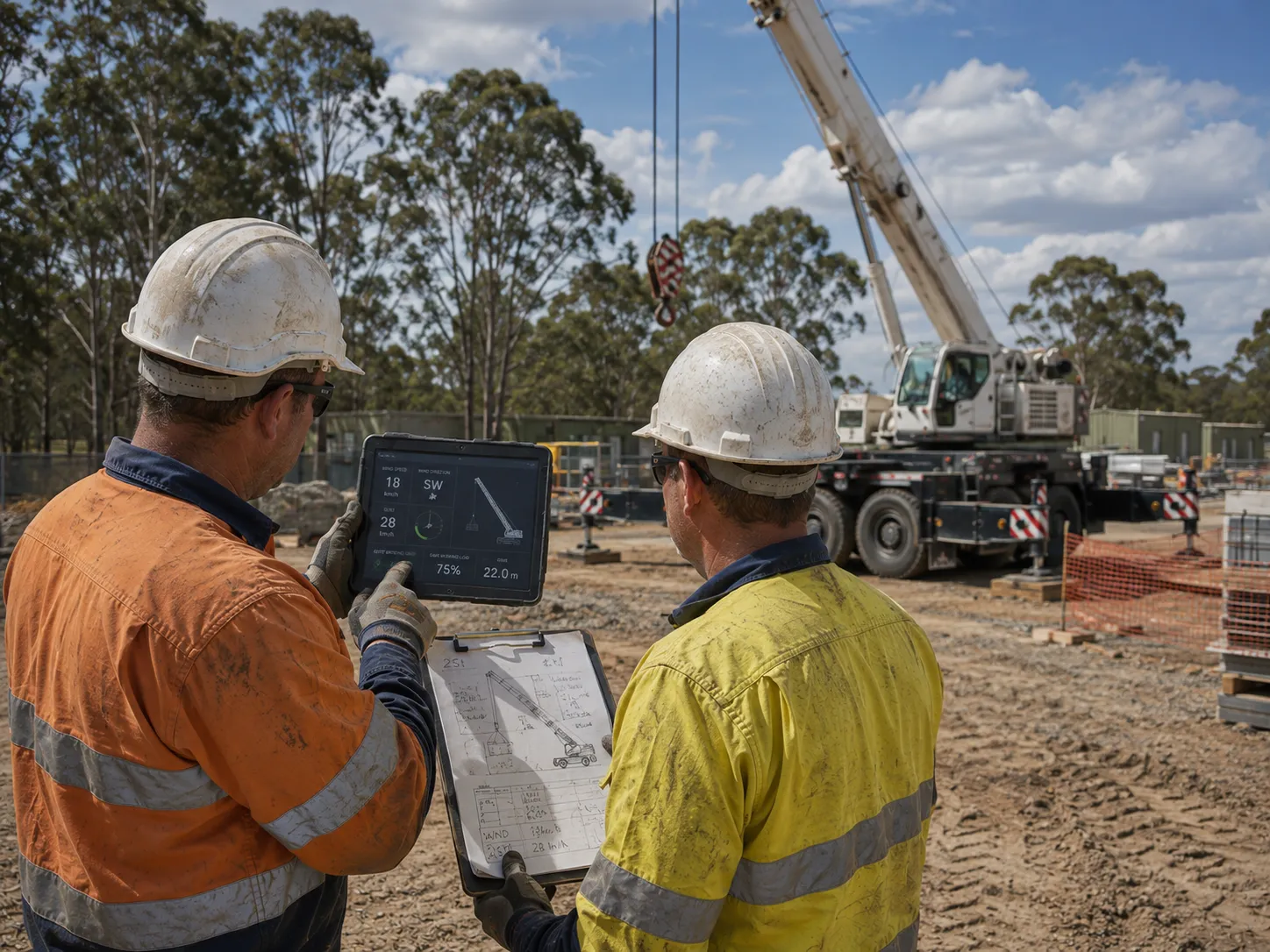
Weather delays are a foreseeable part of crane work, particularly on exposed sites or projects involving large wind-sensitive loads. Planning for these delays before mobilisation can reduce disruption and, importantly, remove pressure from crews to continue working in marginal conditions simply because a crane, delivery or road closure has already been booked.
Project programs should allow realistic contingency for weather-related interruptions.
Depending on the project, planning may include:
Coastal, elevated and highly exposed sites may require more contingency than protected locations.
Critical lifts involving panels, long structural members or other loads with significant sail area can also benefit from flexible scheduling so they can be completed during more favourable conditions.
Weather forecasts should be reviewed when planning a lift, particularly where strong winds, storms or heavy rainfall are expected. The Bureau of Meteorology provides forecasts and warnings for hazardous conditions including damaging winds, severe thunderstorms and heavy rainfall.
Forecast information can help determine whether a lift should be scheduled, delayed or moved to another part of the day. However, a forecast does not replace actual site measurements. On the day of the lift, the crane operator and lifting team still need to consider the conditions being experienced at the crane and compare them with the applicable manufacturer limits and lift-specific requirements.
Because crane hire is often linked to deliveries, traffic control, road closures and other trades, even a short weather delay can affect the wider construction program. Site logistics should therefore allow for the possibility that lifting may stop.
Where practical:
This allows weather decisions to be based on safety and operating limits rather than scheduling pressure.
There is no single wind speed that determines whether every crane operation is safe to continue. The appropriate limit depends on the crane manufacturer’s requirements, crane configuration, working radius, lift height, load size and sail area, as well as the conditions experienced at the site. Gusts, changing wind direction, reduced visibility and unstable ground can also require a lift to be postponed even when recorded wind speeds remain below a published maximum.
Effective crane operations therefore depend on careful lift planning, appropriate weather monitoring and a willingness to stop work when conditions become unsuitable. GBP Cranes & Heavy Haulage considers the crane, load, site conditions and applicable operating limits when planning lifting work, helping ensure weather-related decisions are based on safe operating conditions rather than a single generic wind-speed figure.
