Over 50 Years of Experience | We can lift it & shift it!

Can a Crane Help Replace Machinery Inside an Existing Shed?
October 29, 2026
Replacing a machine inside an established shed can be more complicated than getting it through the door. Existing equipment, storage, overhead services and restricted aisles can make it difficult to remove the old unit and position its replacement without disrupting nearby operations. GBP Cranes & Heavy Haulage can help workshops and industrial facilities in Tamworth assess the crane lifting requirements as part of a machinery replacement.
Before booking a lift, establish whether the machine can pass through the available openings, where the crane's work will end and how the outgoing equipment can be removed safely. Planning these details early clarifies the scope of work, coordinates the relevant specialists and reduces unnecessary equipment relocation or production downtime.
A machine that appears small enough to fit through a doorway may still be difficult to move safely into position. The entire route needs to be assessed, from the collection point to the agreed landing area, including overhead clearance, internal turning space and any restrictions around neighbouring machinery.
The assessment should consider the machine's dimensions, the proposed handling method and the space needed to manoeuvre it. Preparing accurate measurements and photographs before requesting a quote helps identify potential access problems early.
A machine's footprint shows how much floor space it occupies when installed. Its travel envelope accounts for the space required while it is being handled, including projecting components, approved lifting attachments and the clearance needed for the proposed movement.
Manufacturer documentation can establish the machine's dimensions, mass, centre of gravity and designated lifting provisions. Confirm that the information relates to the actual machine configuration, as fitted motors, guards and other components can affect its size and balance.
Provide these details to the professionals planning the lift. The handling orientation must suit the manufacturer's requirements and the assessed lifting method. Tilting the machine or using alternative lifting points should never be assumed acceptable simply because it appears to make the route easier.
The clear opening may be smaller than the doorway's advertised dimensions. Roller door tracks, the raised door, beams, lights and overhead services can all reduce the available clearance.
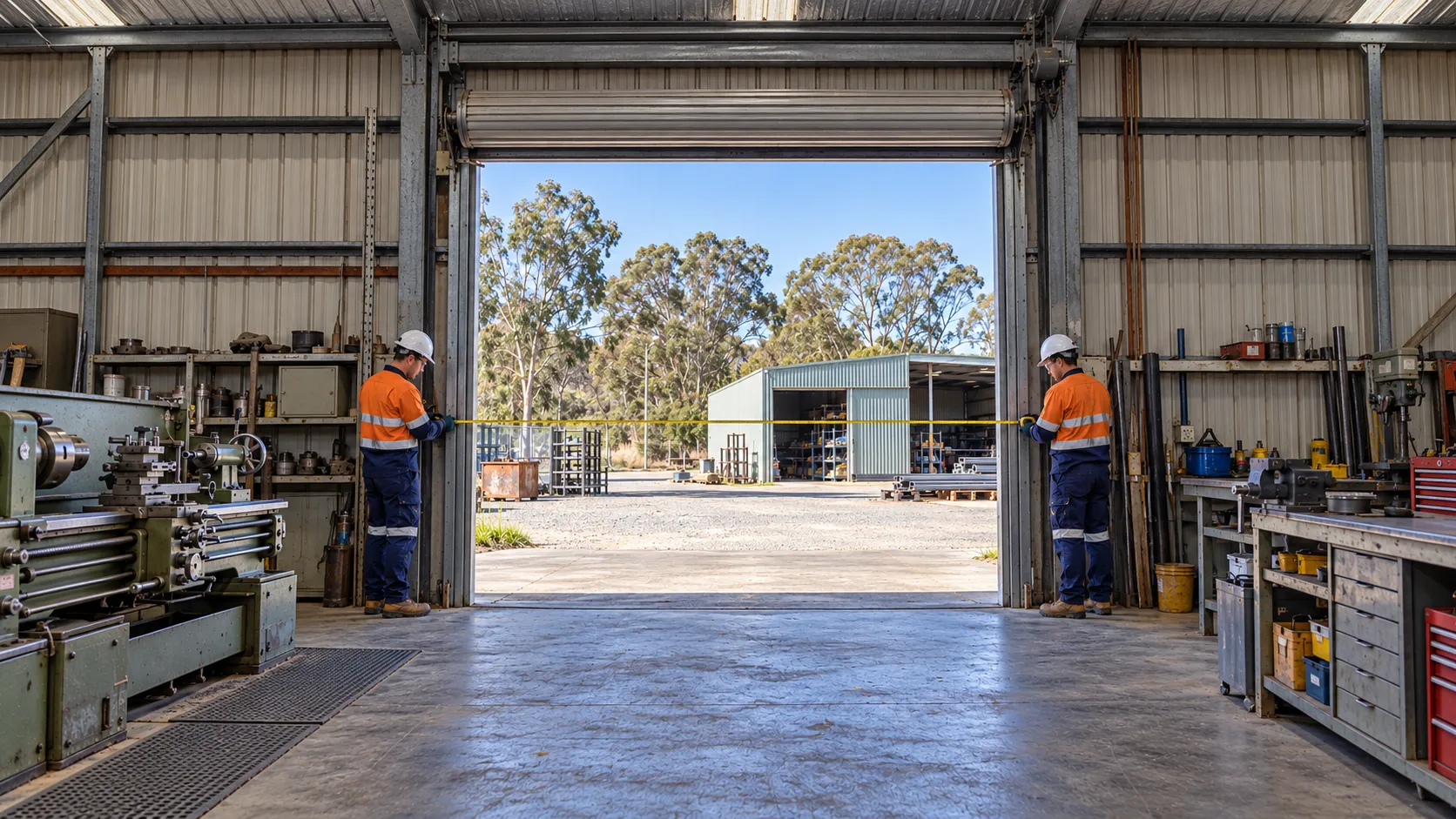
Internal restrictions matter just as much. A machine may pass through the entrance but encounter a narrow aisle, a low beam or a neighbouring unit that prevents it from turning towards the intended position.
For example, a replacement machine in a workshop might fit through the main roller door but still be unable to reach its intended location without a planned change of direction. Measuring the entrance alone would not establish if the complete movement is feasible.
Before requesting a quote, record the opening dimensions, internal clearances, overhead obstructions and available space around the intended landing point. Photographs of the external approach and the internal route can help, although an on-site assessment may be necessary to confirm the arrangement.
A crane's ability to reach a particular position depends on the load, lifting radius, boom configuration, setup location, ground conditions and surrounding obstructions. Its maximum advertised capacity does not automatically establish that it can safely lift the same load at the required reach.
The explanation of why lift radius matters as much as weight provides useful context when assessing these requirements.
When comparing options for cranes in Tamworth, provide experts with information about the external approach and the intended landing position inside the shed. Confirm whether the proposed scope includes placing the machine in its final location or ends at an accessible handover point. If additional internal movement is required, that stage should be assessed and arranged with machinery-moving professionals before the lift is booked.
Crane lifting and machinery installation are connected but separate tasks. A crane may unload the replacement and place it at an agreed landing point without completing the movement into its final operating position.
The quote and work plan should identify exactly where the crane's responsibilities end. Otherwise, a machine could be left in a temporary location while the workshop waits for the next team to arrange its positioning.
The landing position should be agreed upon before lifting day. It needs to accommodate the planned crane operation and allow the next stage of movement to proceed without creating additional access problems.
Confirm whether the crane scope includes removing the old machine, placing it temporarily for collection, unloading the replacement or positioning either unit at a designated location. Each movement may involve different access and lifting requirements.
The outgoing machine may be harder to reach than the replacement if surrounding equipment has been added since its original installation. The removal and delivery plans should be assessed separately rather than treating them as identical operations.
Document the agreed landing point and confirm that the machinery installation specialist can continue from there. If the location or site conditions change, the professionals should reassess the arrangement before proceeding.
SafeWork NSW outlines the responsibilities when hiring a mobile crane, including providing accurate lifting information, preparing the site and coordinating the lifting activities.
Once the machine is inside the shed, it may need to be moved through a restricted aisle or adjusted into its final position. Depending on the load, floor conditions and available clearance, experts may consider equipment such as machinery skates, rollers or other suitable handling systems.
The appropriate method must be selected following an assessment of the machine and site. The floor must also support the loads imposed by the machine, temporary supports and handling equipment. These loads may be concentrated over smaller areas than the machine's normal installed footprint.
Existing concrete should not be assumed suitable simply because it has supported workshop equipment previously. Where the floor's capacity or condition is uncertain, obtain an assessment from an expert before moving or landing the machinery.
Before booking, clarify who will supply and manage the internal positioning equipment, assess the movement requirements and coordinate the handover between the crane provider and installation team. The practical considerations covered in what to clarify before hiring a crane can also help when defining the scope of work.
Placing a machine in position does not mean it is ready to operate. Depending on the equipment, the remaining work may include anchoring, alignment, reconnection of services, testing and commissioning.
Electrical, plumbing, gas and other regulated work must be carried out by licensed trades where required. Machine-specific installation and commissioning should be completed by specialists in accordance with the manufacturer's requirements.
The NSW Government explains NSW electrical safety requirements, including using a licensed electrician for electrical wiring work and obtaining the relevant compliance documentation.
Arrange these responsibilities before the lifting date, including the disconnection and preparation of the outgoing machine. Confirm which tasks are included in each supplier's scope rather than assuming they form part of the crane hire.
The production schedule should also account for the time needed to complete installation and verify that the equipment is ready for use. The end of the lifting operation is not necessarily the time the machine can return to service.
Keeping neighbouring machines in their existing positions may be possible, depending on the outgoing and incoming routes and the space required for each stage. The best way to avoid unnecessary relocation is to plan the removal before the replacement arrives.
A floor plan showing machinery, fixed benches, storage areas and overhead restrictions helps professionals identify genuine access problems. It also helps distinguish between items that must remain undisturbed and movable obstacles that can be cleared temporarily.
The old machine may be surrounded by equipment or services installed after the original setup. Its former entry route might no longer be available, so the removal plan must reflect the workshop's current layout.
Identify neighbouring machines, fixed workstations, storage and overhead restrictions along the proposed route. Include projecting components and other obstructions that may not be obvious on a basic floor plan. Photographs can provide additional context for the assessment.
The outgoing machine's condition also needs consideration. Missing documentation, modifications or uncertain lifting provisions should be raised with the professionals responsible for planning its removal. Equipment that performs the same function as the replacement cannot automatically be assumed to have the same handling requirements.
The issues discussed in common mistakes made before booking a crane are relevant when incomplete access information could affect the lifting plan or quoted scope.
A replacement project can temporarily require more space than either machine occupies during normal operation. The outgoing unit may need to be placed somewhere before collection, while the replacement needs an unloading area and enough room for the next stage of positioning.
Delivery timing can determine whether neighbouring equipment needs to move. If the replacement arrives before the old machine has been removed, both units may compete for the same doorway, aisle or temporary landing area.
Coordinate the removal, delivery and internal positioning against an agreed sequence. Ask the planners to identify which temporary spaces are needed, how long they will be occupied and whether the proposed sequence leaves the access route clear at each stage.
In some sheds, moving a few items of storage may be enough to create the required clearance. In others, the removal route may require neighbouring machinery to be relocated. Establishing the difference before lifting day helps avoid unnecessary handling and last-minute changes.
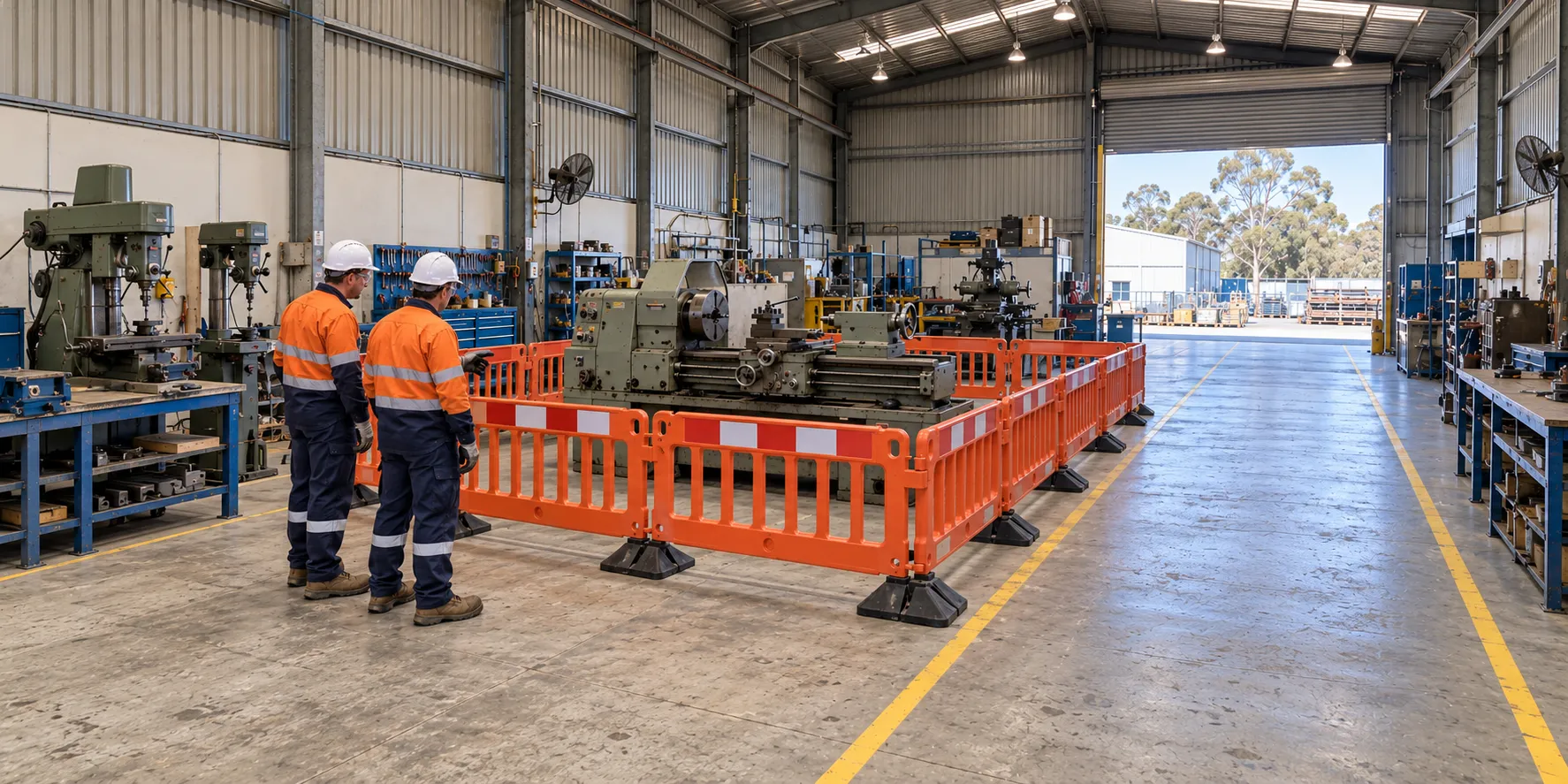
A neighbouring machine may be able to remain in place without being safe to operate during the lifting work. The crane operation, load movement and subsequent positioning may require exclusion zones, restricted access or equipment isolation.
Tell the planners which machines operate nearby and which routes staff use to move through the shed. This information helps them assess potential conflicts between the lifting operation and routine workshop activity.
Follow the agreed safety arrangements and ensure that any required isolations and access restrictions are managed by the responsible personnel. Staff should know which areas will be unavailable and when normal access can resume.
Production planning should also account for restrictions during internal positioning and installation, not just the crane lift itself. Communicating these arrangements in advance helps prevent staff from relying on an aisle or workstation that must remain clear.
Replacing machinery inside an established shed requires coordination between the crane provider, specialists and the trades responsible for installation. Accurate measurements, a documented movement route and a clearly defined handover point can help identify access problems before they affect the schedule.
GBP Cranes & Heavy Haulage can discuss the crane lifting requirements and the site information needed to assess the proposed work. Confirming the scope, access constraints and responsibilities early helps establish a more realistic plan for removing the old machine, bringing in its replacement and preparing the equipment for operation.
